


Views: 0 Author: Site Editor Publish Time: 2026-11-02 Origin: Site


Commercial landscaping and retail garden centers are shifting away from heavy, fragile materials. They prefer high-fidelity synthetic alternatives. Sourcing commercial-grade inventory requires evaluating a fragmented market of manufacturers and direct importers. Buyers must balance unit economics and Minimum Order Quantities (MOQs). They also need product durability, UV resistance, and aesthetic authenticity. Finding reliable suppliers means looking past glossy catalogs. You must evaluate manufacturing methods and supply chain logistics.
This guide provides a technical evaluation framework. You will learn how to source wholesale decorative plastic flower pots effectively. We compare supplier categories and highlight procurement metrics. You will discover how to mitigate supply chain risks associated with bulk container freight. By understanding polymer differences and freight economics, you can optimize your inventory purchasing strategy.
Supplier Stratification: Direct domestic manufacturers offer the best unit economics for high-volume buyers, while direct importers, wholesale marketplaces, and local supply houses provide lower MOQs suitable for independent retailers and event planners.
Material Nuance: Not all plastics perform equally; evaluating the specific polymer (e.g., high-density polyethylene vs. standard polypropylene) is critical for structural integrity and UV resistance.
Freight Economics: The primary cost driver in wholesale planters is freight volume ("shipping air"). Supplier selection must factor in nesting capabilities, regional distribution centers, and local cash-and-carry options.
Aesthetic Viability: Advancements in rotational molding have made imitation-stone decorative flower pots virtually indistinguishable from natural materials, fundamentally altering the plastic planters vs ceramic pots value proposition.
Establishing baseline quality requirements prevents costly purchasing mistakes. You must define these standards before engaging suppliers. Otherwise, you risk buying low-grade nursery containers disguised as premium inventory. Commercial applications demand specific structural and aesthetic properties. We evaluate these properties through polymer selection and finish fidelity. You need decorative plastic flower pots that withstand harsh weather and heavy soil loads.
Understanding plastic types is your first defense against product failure. Injection-molded polypropylene offers a cost-effective, rigid solution. Manufacturers often use it for indoor or seasonal applications. It takes vibrant colors well and supports rapid production cycles. However, standard polypropylene can become brittle in freezing temperatures. It may crack under heavy soil loads. You must verify the wall thickness when buying polypropylene vessels. Thin walls flex under pressure and cause root disturbance.
Rotationally molded polyethylene provides a superior alternative for demanding environments. This process creates impact-resistant, commercial-grade vessels. The material withstands extreme temperature fluctuations without cracking. It remains flexible enough to absorb blunt force. When sourcing inventory, you must also evaluate UV stabilization ratings. Commercial outdoor applications require high-grade UV inhibitors. These additives prevent embrittlement and stop color fading over time. You should ask suppliers for the specific UV rating of their resin.
Polymer Type | Manufacturing Process | Primary Strengths | Primary Weaknesses | Best Application |
|---|---|---|---|---|
Polypropylene (PP) | Injection Molding | High rigidity, vibrant colors, low cost | Brittle in freezing temps, lower impact resistance | Indoor retail, seasonal outdoor displays |
Polyethylene (PE) | Rotational Molding | Extreme impact resistance, frost-proof, flexible | Higher unit cost, longer production times | Commercial landscaping, year-round outdoor use |
High-Density Polyethylene (HDPE) | Blow Molding / Injection | Excellent chemical resistance, high tensile strength | Limited finish textures compared to rotomolding | Nursery growing pots, functional inserts |
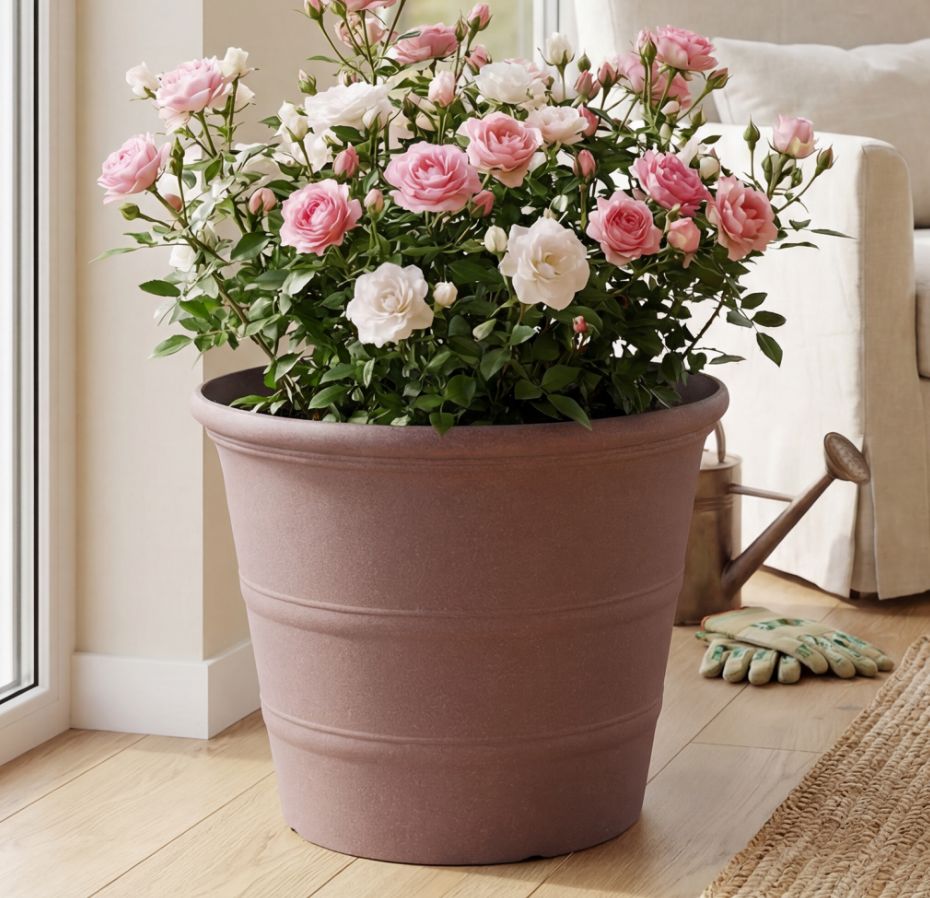
Manufacturing techniques dictate the final visual quality of the product. Advanced rotational molding creates highly realistic faux terracotta and metallic finishes. Suppliers use textured molds to replicate natural imperfections. This process produces convincing imitation-stone decorative flower pots. The best manufacturers blend multiple resin colors during molding. This technique creates depth rather than relying on superficial paint layers. Paint eventually chips and peels in outdoor environments. Molded-in colors remain permanent regardless of weather exposure.
Interior plantscaping requires different visual standards. High-end installations often utilize decorative plastic cachepots. These vessels need flawless matte finishes and seamless molds. Visible parting lines ruin the premium illusion. Hidden drainage systems are also essential for indoor use. You must specify these aesthetic requirements clearly in your supplier communications. Request high-resolution photos of the mold seams before ordering.
Maintaining visual consistency across a large commercial property requires strict dye lot management. Manufacturers mix color pigments directly into the raw resin before molding. Slight variations in the pigment ratio or heating temperature cause noticeable color shifts between production runs. You must order your entire project inventory from a single dye lot. Mixing vessels from different production batches results in mismatched displays. Dark colors like black, charcoal, and espresso absorb massive amounts of solar radiation. This heat accelerates UV degradation and causes premature fading. You should specify premium UV inhibitors when ordering dark vessels for outdoor installations. Lighter colors like terracotta, sand, and concrete gray reflect heat and generally maintain their original appearance longer.
Commercial installations fail when water management systems malfunction. You cannot rely on basic punch-out holes for high-end landscaping projects. Poorly designed drainage leads to root rot and plant death. You must evaluate how the manufacturer engineers water flow. Look for elevated drainage channels that prevent the vessel from sitting in standing water. Some advanced synthetic vessels feature integrated sub-irrigation systems. These self-watering reservoirs reduce maintenance labor for commercial clients. They allow maintenance crews to extend watering cycles from days to weeks. When sourcing inventory, verify the exact dimensions of the drainage plugs. Loose plugs leak onto expensive interior flooring. Overly tight plugs require tools to remove, slowing down the installation process.
Evaluating the financial impact goes beyond the initial invoice price. You must analyze the long-term operational costs. When analyzing plastic planters vs ceramic pots, shrinkage rates heavily favor synthetic materials. Fragile materials suffer high breakage rates during transit. Retail handling also causes significant inventory loss. Synthetic alternatives virtually eliminate these specific damages. You stop paying for shattered inventory arriving on pallets.
Ergonomic benefits also drive commercial adoption. Installation teams handle heavy soil volumes daily. Weight reduction improves job site safety and speeds up deployment. Rooftop gardens and large-scale commercial fit-outs strictly limit structural loads. Lightweight synthetic vessels meet these engineering constraints easily. They allow for larger plant specimens without exceeding weight limits. You can maneuver massive synthetic vessels with two workers instead of a forklift.
Categorizing the supply chain helps match vendors to your specific needs. Your operational scale dictates the best sourcing channel. Storage capacity and capital allocation also play major roles. We break down the primary supplier types below. You must align your purchasing strategy with your physical warehousing capabilities.
Direct manufacturers serve large-scale nurseries and greenhouse growers. Enterprise retail chains and major commercial landscapers also utilize this channel. Buying direct eliminates middleman markups entirely. You communicate directly with the factory floor regarding specifications. You must understand the tooling costs if you want custom designs. Manufacturers charge thousands of dollars to cut a new steel or aluminum mold. You only recoup this investment through massive volume. Stick to the manufacturer's existing catalog if you lack the capital for custom tooling. Ask the factory about their production capacity. A factory running three shifts can fulfill your order much faster than a facility running a single shift.
You secure the lowest per-unit cost available on the market.
Manufacturers offer custom color runs and proprietary mold options.
You receive direct warranty support and a strict commercial-grade focus.
This channel demands the highest MOQs, often requiring full truckloads.
Custom production runs require significantly longer lead times.
Specialized distributors cater to independent garden centers. Mid-sized landscaping firms also rely heavily on direct importers. These suppliers bridge the gap between overseas factories and domestic buyers. They handle the complex customs and import documentation for you.
They offer curated selections of decorative plastic planters sourced globally.
You can leverage their established import logistics and warehouse networks.
They frequently allow mixed-pallet ordering capabilities for diverse inventory.
Distributor markups naturally increase the per-unit cost.
Your options are limited to the distributor's seasonal purchasing decisions.
The "near me" approach works best for regional landscapers. Local florists and buyers needing immediate inventory use this channel. It effectively eliminates complex freight logistics. You drive a box truck to the loading dock and load the inventory yourself. Build relationships with the warehouse managers at these local branches. They control the allocation of high-demand inventory during the spring rush. A strong relationship ensures you get the first call when a new truckload arrives. You can often negotiate volume discounts if you commit to buying all your seasonal inventory from one local branch.
You gain cash-and-carry convenience for immediate project needs.
This completely bypasses expensive LTL freight fees.
You can physically inspect the finish quality before purchasing.
Supply houses carry limited catalog depth compared to national distributors.
They maintain a higher baseline pricing structure to cover local warehousing.
Digital wholesale platforms connect buyers with independent brands. Boutique plant shops and interior designers frequently use these networks. Niche e-commerce brands also source inventory here. These platforms streamline the discovery process for unique designs.
You gain access to unique, design-forward brands not found in big-box stores.
Platforms often provide flexible payment terms to help cash flow.
They generally require much lower MOQs than traditional distributors.
Quality control varies wildly between different sellers on the platform.
International freight costs can unexpectedly inflate the final invoice.
Industrial catalogs serve micro-businesses and event planners. They provide immediate solutions for low-volume needs. You might buy six-packs or case-level micro-bulk here. The ordering process mimics standard consumer e-commerce.
Shipping is rapid and logistics are highly predictable.
Procurement of complete sets is very easy and straightforward.
You get vessels with matching saucers and pre-drilled drainage.
Decorative options remain severely limited to basic functional designs.
The cost-per-unit is much higher than true wholesale channels.
Auditing potential suppliers requires looking beyond the initial catalog price. A low unit cost means nothing if freight charges destroy your margins. You must evaluate suppliers across several operational dimensions. This framework helps you identify reliable long-term partners. You need vendors who understand commercial logistics.
Suppliers structure their pricing in various ways. You might see quotes per piece, per case pack, or per pallet. Some overseas factories only quote per full shipping container. You must analyze these structures carefully. Calculate the break-even point for your business. Determine exactly where distributor markups become less efficient than manufacturer MOQs. Sometimes paying a slightly higher unit price saves capital by preventing overstock. You avoid tying up cash in slow-moving inventory.
Sourcing location impacts your entire operational timeline. Domestic molders offer significantly shorter lead times. Their freight logistics remain predictable and relatively stable. However, domestic labor and overhead often increase the base product cost. Direct overseas importers provide much lower unit costs. Yet, this route exposes you to tariffs and global supply chain delays. You must weigh these trade-offs against your seasonal deadlines. Missing the spring rush due to a delayed container destroys annual revenue.
The primary cost driver in wholesale procurement is freight volume. Empty vessels take up massive amounts of space. You are essentially paying to ship air. Evaluate the supplier's product design for stackability. Nesting capabilities are absolutely critical. Non-nesting designs exponentially increase your freight costs. You should also assess the geographical proximity of the supplier's distribution centers. Closer warehouses minimize expensive less-than-truckload (LTL) freight charges.
Design Type | Stackability | Freight Efficiency | Storage Footprint |
|---|---|---|---|
Tapered / Conical | High (Deep Nesting) | Excellent (Max units per pallet) | Minimal warehouse space required |
Cylinder / Straight-Walled | None | Poor (Shipping mostly air) | Maximum warehouse space required |
Square / Cube | Low (Shallow Nesting) | Moderate | Moderate warehouse space required |
Urn / Pedestal | None (Unless two-piece design) | Very Poor | High warehouse space required |
You must understand how the factory packages the inventory before it arrives at your loading dock. Poor pallet configuration leads to crushed vessels and unstable loads. Ask the supplier for their exact pallet dimensions and stacking height. Standard pallets measure forty-eight by forty inches, but some overseas factories use custom sizes that jam in standard warehouse racking. Verify that the supplier shrink-wraps the pallets heavily and uses corner protectors. Loose shrink-wrap allows the nested columns to shift during transit, causing severe scuffing on the exterior finishes. You should also confirm whether the pallets are stackable. Non-stackable pallets double your required floor space and complicate warehouse storage.
A strong supplier provides a cohesive aesthetic across multiple form factors. You want matching window boxes, tall urns, and tabletop vessels. Mixing and matching different brands rarely yields a uniform look. Verify the availability of integrated functional features. Look for self-watering reservoirs and pre-drilled drainage holes. Punch-out holes often crack if manufactured poorly. Ensure the supplier offers matching saucers and vibrant color options for retail displays. You need a vendor capable of supplying an entire coordinated collection.
Bulk procurement carries inherent financial risks. Identifying these pitfalls early protects your capital. You must implement strict mitigation strategies before signing purchase orders. You must monitor quality control and timeline management constantly. You cannot assume every shipment will arrive perfectly.
Receiving a container of defective inventory is a buyer's nightmare. You risk finding visible mold seams or excessive plastic flashing. Inconsistent dye lots can ruin a coordinated retail display. You must mandate physical sample reviews. Do this before authorizing full production runs or pallet orders. Check the finish quality under natural light. Measure the wall thickness with calipers. Verify that the matching saucers actually fit the bases properly. Test the drainage plugs to ensure they create a watertight seal. You should also conduct a destructive test on one sample unit. Drop it from a height of three feet onto concrete. A high-quality rotationally molded vessel will bounce and scuff. A cheap injection-molded vessel will shatter or crack along the mold seam. Fill the sample with water and let it sit for forty-eight hours. Check for slow leaks around the drainage plug. Inspect the interior walls for thin spots where the resin failed to distribute evenly during molding. Hold the vessel up to a strong light source. If you see light shining through the plastic, the walls are too thin for commercial soil loads.
A low unit price means nothing if the supplier abandons you after delivery. You must scrutinize the warranty terms before signing a purchase order. Commercial environments subject vessels to extreme abuse. Landscaping crews hit them with string trimmers. Pedestrians kick them. Extreme weather causes thermal expansion and contraction. You need a warranty that covers structural failure and severe color fading. Ask the supplier for their exact defect recourse policy. Determine who pays the return freight if a pallet arrives damaged. Some overseas factories refuse to cover return shipping, leaving you with useless inventory. Domestic manufacturers generally offer stronger warranty support and faster replacement shipments. You should negotiate these terms upfront during the initial RFQ process.
Stockouts during peak spring purchasing seasons cripple revenue. Delayed overseas shipments cause major disruptions. Domestic manufacturing backlogs also create unexpected shortages. You must align your procurement cycles with supplier lead times. International freight often requires 90 to 120 days. Negotiate staggered delivery schedules for large domestic orders. This ensures a steady flow of inventory without overwhelming your storage capacity. Build a buffer into your timeline to account for port strikes or trucking shortages. You must also factor in the Chinese New Year if sourcing from Asian factories. This holiday shuts down production for weeks and creates massive shipping bottlenecks. Smart buyers place their spring orders in October. This guarantees delivery by February, allowing ample time for retail merchandising. If you rely on domestic molders, ask about their resin supply chain. Resin shortages frequently delay domestic production runs. Secure your production slot early with a deposit. Do not wait until March to order inventory for April installations. You will end up paying exorbitant spot-market prices or settling for inferior products.
Draft a standardized Request for Quote (RFQ) detailing your required volumes and preferred polymer types.
Specify your exact drainage requirements and strict delivery timelines in the initial vendor outreach.
Request physical samples from your top three shortlisted vendors immediately.
Conduct in-house durability tests, including drop testing and saucer fit evaluations.
Calculate the total landed cost, factoring in all LTL freight estimates before issuing a purchase order.
A: MOQs vary drastically by supplier type. Bulk retail platforms often offer case-level minimums. Regional distributors typically require a minimum order volume. Direct domestic manufacturers usually demand pallet or full truckload minimums. Overseas factories frequently require a shipping container as their baseline MOQ.
A: Locate regional horticultural supply houses through local landscaping associations. Search for cash-and-carry wholesale distributors in your state. Visiting these local warehouses allows you to bypass high LTL freight costs entirely. You can also inspect the inventory physically before committing to a bulk purchase.
A: Synthetic versions offer massive weight reduction and superior impact resistance. They eliminate the structural load issues common with real stone on rooftops. They also provide significant cost savings on installation labor. You must ensure they use UV-stabilized polyethylene for long-term outdoor longevity.
A: Yes, provided you select the correct polymer. Rotationally molded polyethylene is frost-resistant and withstands freezing temperatures without cracking. Conversely, cheap injection-molded plastics often become brittle and shatter in the cold. Always verify the temperature rating and UV stabilization with the manufacturer before outdoor deployment.
A: You must purchase nestable designs to maximize freight density. Non-nesting shapes force you to pay for empty space. Source from regional distribution centers or domestic molders closer to your facility. Consolidating your orders into full truckloads also significantly reduces the cost per pallet compared to LTL shipping.
A: A cachepot is a decorative outer vessel designed without drainage holes. It is meant to hold a functional, less attractive nursery pot inside. This setup prevents water from leaking onto floors or furniture. Interior plantscapers commonly use them to swap out plants quickly without repotting.
A: Synthetic inventory generally offers a better return on investment for retailers. It drastically reduces shrinkage and breakage costs during transit and floor handling. It also incurs lower inbound freight expenses due to its lighter weight. This allows retailers to maintain higher profit margins.


