


Views: 0 Author: Site Editor Publish Time: 2026-10-26 Origin: Site


Procuring commercial-grade planters at scale presents a unique procurement challenge where aesthetic requirements frequently clash with logistical realities, harsh environmental demands, and strict project budgets. Landscape architects, developers, and property managers often struggle to balance upfront wholesale costs with long-term durability. Specifying the wrong material or underestimating freight complexities can lead to project delays, budget overruns, or premature product failure like cracking, fading, and structural bowing. This guide provides a technical framework for evaluating wholesale suppliers, comparing material trade-offs, mitigating shipping risks, and standardizing procurement for high-volume landscape projects, ensuring a seamless integration into both modern and transitional spaces.
Material dictates lifespan and logistics: The choice between fiberglass, GFRC, and metal directly impacts freight costs, installation labor, freeze-thaw resilience, and long-term maintenance protocols.
Shape influences structural integrity and function: High-capacity profiles require reinforced walls to prevent bowing under soil weight, while specific shapes can double as pedestrian barriers or security perimeters.
Wholesale vetting requires looking beyond unit price: Procurement must account for LTL freight classifications, palletization efficiency, commercial warranty terms, and customization capabilities.
Lead times dictate sourcing strategy: Domestic manufacturing offers supply chain predictability and agile customization, while overseas sourcing requires strict MOQ management and extended project phasing.
Regional weather patterns dictate material selection long before aesthetic preferences come into play. Freeze-thaw cycles exert immense pressure on rigid materials, requiring containers that can accommodate slight expansion without fracturing. High UV exposure in southern climates demands automotive-grade finishes to prevent chalking and color degradation. Coastal environments introduce salt spray, which rapidly corrodes untreated metals and degrades porous concrete surfaces. You must evaluate the specific microclimate of the installation site, including wind tunnels created by adjacent high-rise buildings and reflected heat from glass facades.
Establishing baseline requirements for structural weight limits is equally critical. Rooftop installations and suspended amenity decks operate under strict pounds-per-square-foot (PSF) load capacities. These elevated spaces necessitate lightweight composite materials. A saturated container holding two cubic yards of soil can easily exceed the structural limits of an older roof deck. Conversely, ground-level hardscapes and public plazas can support massive concrete or thick-gauge steel units, which often serve dual purposes in the landscape design.
Modern landscape architecture frequently utilizes heavily weighted planters as aesthetic security perimeters. Corporate campuses, government facilities, and public plazas integrate these elements to protect pedestrian zones without relying on aggressive steel bollards. When a large outdoor planter is utilized for pedestrian safety and traffic deflection, determining the necessary mass and anchoring requirements becomes a strict engineering exercise. You cannot rely on visual deterrence alone; the physical mass must match the anticipated threat level.
Hostile Vehicle Mitigation strategies require planters to achieve specific crash ratings. This involves calculating the combined weight of the vessel, saturated soil, and internal concrete footings. Even non-rated installations require substantial mass to deter accidental traffic incursions. The physical footprint of the container must provide enough surface friction against the hardscape to resist displacement upon impact. Engineers often specify internal steel sleeves that bolt directly to the concrete substrate, hiding the structural reinforcement beneath the soil line.
Project timelines dictate sourcing options entirely. Custom molds and bespoke finishes require extended lead times, often pushing delivery schedules out by several months. Off-the-shelf wholesale inventory provides immediate solutions but limits design flexibility. Analyzing the critical path of a construction schedule reveals exactly when these heavy elements must arrive on site. Ordering too early creates storage problems; ordering too late delays the final certificate of occupancy.
Aligning delivery schedules with heavy machinery availability is mandatory on active construction sites. Large commercial planters require forklifts, telehandlers, or cranes for placement. Coordinating the arrival of flatbed trailers with the presence of rigging crews prevents costly delays. Staging areas must be prepped to receive massive pallets, as moving these units multiple times increases the risk of cosmetic damage. Site superintendents must map out the exact travel path from the loading dock to the final installation point, accounting for door widths and elevator weight limits.
The physics of wet soil weight in high-capacity containers surprises many procurement teams. Saturated planting media exerts tremendous outward hydrostatic pressure against the interior walls of a vessel. Wet soil weighs roughly 100 to 120 pounds per cubic foot. A container holding three cubic yards of wet soil can weigh several thousand pounds. This internal force seeks the path of least resistance, which is typically the center of the longest flat sidewall.
Preventing structural failure requires internal cross-bracing or reinforced sidewalls in oversized units. Manufacturers achieve this by laminating steel or aluminum ribs into the fiberglass matrix, or by increasing the wall thickness of concrete casts. Without these engineering interventions, large rectangular profiles will inevitably bow outward, compromising the aesthetic lines and potentially leading to catastrophic structural rupture. You must verify that the manufacturer has engineered the vessel specifically for the intended soil volume, rather than just scaling up a smaller residential design.
Selecting the correct material requires balancing upfront costs with long-term performance. The following table outlines the primary characteristics of common commercial materials used in high-volume landscape projects.
Material Type | Weight Profile | Freeze-Thaw Resistance | Primary Commercial Application | Maintenance Requirement |
|---|---|---|---|---|
Fiberglass (FRP) | Lightweight | Excellent (with proper drainage) | Rooftops, balconies, interior-to-exterior transitions | Periodic cleaning, avoid abrasive scrubbers |
GFRC / Cast Stone | Heavy | Moderate (requires sealing) | Ground-level plazas, wind-heavy environments | Annual application of penetrating sealers |
Corten Steel | Heavy | Excellent | Industrial parks, high-traffic urban corridors | Manage rust runoff during initial weathering |
Powder-Coated Aluminum | Medium | Excellent | Coastal environments, modern corporate campuses | Inspect for deep scratches that breach the coating |
High-Density Resin | Lightweight | Superior | High-impact pedestrian zones, public parks | Minimal, highly resistant to vandalism |
Fiberglass offers an exceptionally high strength-to-weight ratio. This reduces freight costs significantly and simplifies rooftop installations where crane time is billed by the hour. The manufacturing process involves layering woven glass fibers with polymer resins, creating a rigid, weather-resistant shell. High-quality FRP can mimic the appearance of stone, concrete, or metal without the associated weight penalty. Contractors favor fiberglass for suspended slabs because it maximizes the allowable weight budget for soil and mature trees.
Fiberglass remains vulnerable to micro-abrasions from maintenance equipment. It requires automotive-grade UV-resistant polyurethane finishes to prevent chalking and color fade over time. Darker colors absorb more heat, which can accelerate the degradation of inferior paint systems. Specifying marine-grade gel coats or high-performance industrial paints ensures the finish survives harsh solar exposure. You should always request physical draw-downs of the paint finish to verify the gloss level and texture before approving a massive wholesale order.
Glass Fiber Reinforced Concrete provides superior wind resistance and traditional masonry aesthetics without the extreme weight of solid poured concrete. By embedding alkali-resistant glass fibers into the cementitious mix, manufacturers achieve high tensile strength with thinner wall profiles. This material excels in historic districts and classic architectural settings where synthetic materials would look out of place. The inherent mass of GFRC makes it an excellent choice for unsecured public areas where theft or accidental displacement is a concern.
The trade-offs include high shipping costs due to the remaining mass. GFRC requires rigid handling requirements to prevent hairline fractures during transit. Forklift operators must lift these units exclusively from designated points, often using specialized nylon rigging straps rather than bare steel forks. Concrete is inherently porous. It remains highly susceptible to graffiti staining and efflorescence without the application of penetrating silane-siloxane sealants. Maintenance teams must reapply these sealers periodically to maintain the protective barrier against moisture intrusion.
Architectural metals deliver extreme longevity and modern industrial aesthetics. Corten steel, or weathering steel, develops a protective rust patina that regenerates when scratched. This eliminates the need for repainting and provides a rugged, organic appearance that blends well with natural landscapes. Powder-coated aluminum resists corrosion entirely, making it the premier choice for coastal installations exposed to salt spray. Aluminum provides crisp, precise geometric lines that complement modern glass facades.
High thermal conductivity is the primary challenge with metal containers. Direct sunlight heats the metal, which can bake delicate root systems and rapidly evaporate soil moisture. Internal insulation panels, typically extruded polystyrene, are required to protect the soil ecology. Corten steel produces rust runoff during its initial weathering phase. This runoff will permanently stain adjacent concrete hardscapes unless the design incorporates specific drainage channels, gravel catch basins, or sacrificial concrete curbs.
Rotational molded polyethylene produces impact-resistant, lightweight containers that are highly resistant to freeze-thaw cracking. The flexible nature of the polymer allows it to expand slightly as wet soil freezes, preventing the vessel from shattering. Manufacturers often utilize recycled materials in the production process, which directly supports corporate ESG goals and LEED certification efforts. Resin containers survive aggressive physical impacts from floor buffers, shopping carts, and landscaping equipment without denting or chipping.
Resin can look synthetic up close, lacking the nuanced texture of natural stone or layered fiberglass. Polyethylene offers limited rigidity in extremely large formats. Oversized resin troughs require internal metal framing to prevent the sidewalls from bulging under hydrostatic soil pressure. When specifying resin for commercial projects, you must ensure the manufacturer uses linear low-density polyethylene (LLDPE) with heavy UV stabilizers to prevent the plastic from becoming brittle after years of solar exposure.
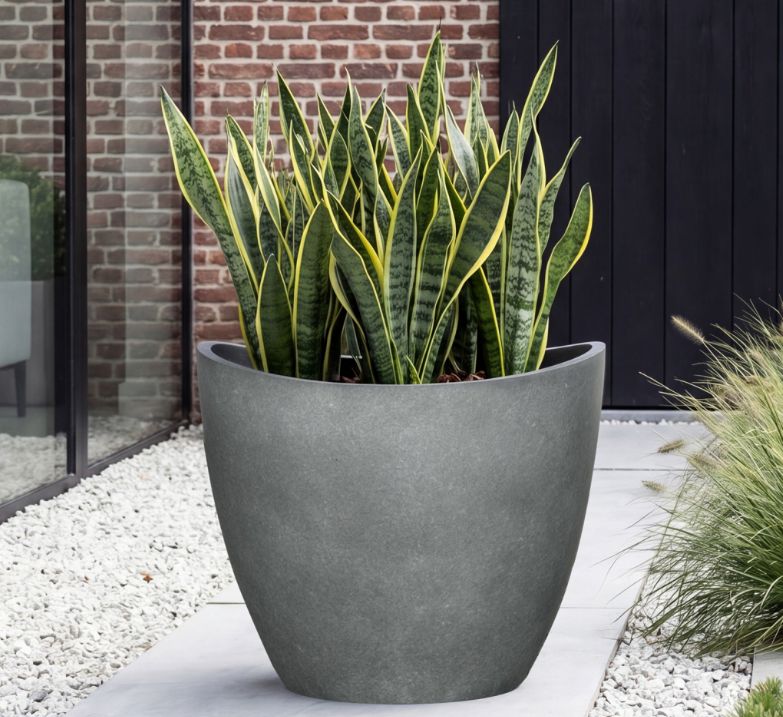
The architectural application of crescent rims excels in softening rigid geometric building facades. Modern glass and steel architecture often benefits from the introduction of sweeping, curved lines at the ground level. A crescent profile draws the eye downward, anchoring tall vertical structures to the pedestrian plane. These shapes break up the monotony of long, linear walkways and provide visual relief in highly structured urban environments.
Beyond aesthetics, rolled or crescent rims provide significant structural benefits. The curved lip acts as a continuous reinforcing beam around the top perimeter. This distributes edge tension evenly, preventing rim deflection under heavy soil loads. Specifying large crescent-rim outdoor planters ensures the container maintains its precise shape even when fully saturated and planted with mature trees. The rolled edge also provides a comfortable resting point for pedestrians in public plazas, subtly encouraging interaction with the landscape.
Tall, narrow profiles serve specific functional roles in commercial space planning. They create highly effective pedestrian traffic barriers, guiding footfall through complex plazas. Restaurant patio partitions rely on these shapes to define dining areas while maintaining an open-air atmosphere. Intimate seating enclaves in corporate courtyards feel secure and secluded when bordered by elevated greenery. The narrow footprint maximizes usable floor space while delivering high-impact vertical foliage.
Tall and narrow footprints introduce severe tipping hazards. Wind-load calculations are mandatory, especially in high-wind urban corridors where downdrafts between skyscrapers create unpredictable gusts. The mature height and density of the specified plantings act as a sail, catching the wind and transferring that force to the base of the container. Securing tall oval landscape planters requires hidden mechanical anchoring systems or heavily weighted internal bases to prevent catastrophic overturning. Contractors typically bolt the internal base plate directly to the concrete slab before adding drainage aggregate and soil.
Classic round profiles offer unmatched versatility in high-traffic commercial environments. They facilitate smooth pedestrian flow, as people naturally navigate around curved objects more easily than sharp corners. Transitional interior-to-exterior designs utilize these shapes to create a continuous visual language from the lobby to the outdoor plaza. The lack of sharp corners makes them inherently safer for environments with high volumes of children or elderly visitors.
Achieving a cohesive transitional design involves pairing large round-rim planters in neutral color palettes with a mix of organic textures. Blending them with surrounding hardscape materials like timber decking or natural stone pavers grounds the installation. Round-rim designs naturally deflect impact. Maintenance equipment, floor buffers, and hurried foot traffic glance off the curved edges, minimizing cosmetic damage over the product's lifespan. This geometric advantage significantly reduces the frequency of touch-up painting and surface repairs.
Commercial projects frequently require strict brand alignment. Assess the supplier's ability to provide custom RAL color matching. This ensures the hardscape elements perfectly match corporate branding or specific architectural palettes. A supplier relying solely on five stock colors cannot support high-end bespoke design requirements. You should request physical color samples cured on the actual substrate material, as paint absorbs differently on fiberglass compared to aluminum.
Evaluate options for structural modifications. Molded-in logos offer a permanent branding solution that resists vandalism. Custom dimensions allow designers to fit containers precisely between existing architectural columns. Integrated lighting channels cast dramatic uplighting onto the foliage, transforming the installation into a nighttime focal point. Suppliers capable of these modifications demonstrate control over their manufacturing process and possess the in-house engineering talent necessary to support complex commercial builds.
The choice between domestic and overseas production dictates the entire procurement strategy. Domestic suppliers offer agility. They accommodate lower minimums, rapid prototyping, and faster resolution of warranty claims. This flexibility is vital for phased construction projects where site conditions change unexpectedly. If a forklift operator destroys two units during installation, a domestic supplier can manufacture replacements in weeks rather than months.
Direct overseas manufacturing provides substantial unit-cost savings, making it attractive for massive rollouts. Buyers must evaluate the hidden costs meticulously. International freight rates fluctuate wildly. Tariffs impact the final landed cost. Port delays and customs inspections can stall a project for weeks. Sourcing overseas requires padding the construction schedule with significant buffer time and working with experienced freight forwarders who understand the nuances of importing oversized architectural elements.
Wholesale pricing tiers operate on volume, but the mechanics vary by supplier. Pallet-level pricing offers discounts for ordering enough units to fill a standard shipping skid efficiently. Container-level pricing provides the deepest discounts but requires purchasing hundreds of units simultaneously. When sourcing outdoor planters wholesale, understanding these thresholds prevents overspending on unnecessary inventory just to hit a discount tier.
Negotiating mixed-SKU containers is a vital procurement skill. Buyers need a framework to meet MOQs without overstocking unnecessary sizes. Work with suppliers who allow combining different shapes and profiles within the same production run. This strategy satisfies factory volume requirements while delivering the exact inventory mix the landscape architect specified. Always request a container loading plan from the factory to verify that the mixed SKUs will actually fit inside a standard 40-foot high-cube container without wasting space.
A credible commercial warranty separates professional suppliers from residential retailers. Define what the warranty actually covers. Coverage against structural failure, such as sidewall blowouts or rim cracking, is non-negotiable. Cosmetic fading warranties are rarer but indicate a high-quality paint system. Read the exclusions carefully; most warranties are voided if the installation lacks proper drainage or if the container is filled with solid concrete instead of planting media.
Identify necessary certifications early in the design phase. LEED contribution documents are required if the project seeks environmental certification. This involves verifying the percentage of recycled materials used in the resin or fiberglass matrix. Fire ratings, specifically ASTM E84 Class A, are strictly enforced by fire marshals for interior-to-exterior transitional spaces and enclosed atriums. A supplier must provide independent laboratory test results to prove their materials meet these stringent fire codes.
Shipping empty containers means you are essentially paying to ship air. Freight class is determined by density, meaning lightweight, bulky items incur massive shipping surcharges. National Motor Freight Classification (NMFC) codes for these products are notoriously high, often landing in Class 150 to 250. Controlling costs requires strategic packing and a deep understanding of dimensional weight calculations used by major freight carriers.
Nesting capabilities are critical. Designing an order where smaller units fit inside larger ones dramatically increases pallet density. This lowers the freight class and reduces the total number of pallet spaces required on the truck. Optimize pallet footprints to stay within standard dimensions. Oversized pallets trigger extreme length surcharges and require specialized handling at LTL terminals. Work with suppliers who custom-build heavy-duty wooden crates rather than relying on flimsy cardboard boxes wrapped in plastic.
Standard operating procedures for receiving wholesale shipments prevent costly disputes. Inspect every pallet for concealed damage before signing the delivery receipt. Look for crushed cardboard corners, stretched shrink wrap, or splintered pallet runners. Document all Bill of Lading exceptions immediately. Once the driver leaves with a clean signature, claiming transit damage becomes nearly impossible, leaving the contractor to absorb the replacement cost.
Safe offloading requires the right equipment. Standard pallet jacks cannot handle oversized pallets safely. Forklifts with 72-inch extended tines are mandatory to support the entire width of the load and prevent the forks from punching through the bottom of the containers. If the site lacks a loading dock, specify liftgate delivery during the quoting process. Attempting to manually unload heavy commercial units from a 48-inch trailer height invites severe injury and product damage.
Water management dictates the lifespan of the installation. Factory-drilled drainage holes are mandatory for exterior applications. Waterlogged soil rots root systems and creates immense ice pressure during winter. Internal reservoirs, or sub-irrigation systems, suit commercial applications by reducing watering frequency and conserving resources. Proper installation requires a systematic approach to layering materials inside the vessel.
Install a layer of drainage aggregate, such as washed gravel or expanded shale, at the bottom of the container to ensure water flows freely to the drainage holes.
Place a layer of commercial-grade permeable filter fabric over the aggregate to prevent fine soil particles from washing down and clogging the drainage ports.
Integrate drip irrigation lines through the bottom drainage holes to hide unsightly plumbing from public view.
Fill the bottom third of oversized vessels with lightweight expanded clay aggregate (LECA) or closed-cell polystyrene blocks to reduce the total soil volume and manage the final installed weight.
Install anti-theft anchoring systems, bolting the internal base plates to the concrete substrate before adding the final layer of planting media.
Audit site load capacities and wind exposure to determine the exact structural requirements for your containers.
Calculate the total required soil volume to establish the true wet weight of the finished installation.
Request physical finish samples and material draw-downs to verify color accuracy and texture under actual site lighting conditions.
Secure comprehensive LTL freight quotes from shortlisted wholesale partners, ensuring they account for dimensional weight and liftgate requirements.
Demand detailed product specification sheets that clearly list empty weight, maximum soil capacity, and warranty exclusions before issuing a purchase order.
A: Fiberglass and high-density polyethylene are ideal due to their ability to expand slightly without cracking during freeze-thaw cycles. Adequate drainage is mandatory to prevent ice expansion from destroying the vessel from the inside out.
A: Shipping is calculated based on dimensional weight and NMFC freight classes. Sourcing nested planters significantly reduces the physical footprint on the truck, which lowers the freight class and reduces LTL shipping costs.
A: Domestic distributor MOQs often range based on specific minimum order values. Overseas factory MOQs typically require purchasing full 20-foot or 40-foot shipping containers to justify the production run and setup costs.
A: The crescent rim itself acts as a structural reinforcement, distributing tension around the perimeter. However, ultra-large sizes still require internal cross-bracing to prevent the sidewalls from bowing under wet soil pressure.
A: Stability is achieved by using weighted bases and mechanical anchoring systems. You must calculate the wind load based on the mature height and density of the specified plantings to ensure safety in high-wind corridors.
A: Yes, year-round outdoor use depends entirely on specifying a commercial-grade material like FRP or Corten steel. You must ensure proper drainage to prevent ice expansion inside the vessel during winter months.


