


Views: 0 Author: Site Editor Publish Time: 2026-06-24 Origin: Site


Commercial plant containment goes far beyond mere aesthetics. It represents critical agricultural infrastructure. For commercial nurseries and high-volume operations, selecting the right container dictates root architecture, water management, and labor efficiency. Ultimately, these factors drive crop margins. Many growers struggle when they confuse temporary retail containers with engineered grower pots designed specifically for demanding cultivation cycles. You need containers built for mechanization, severe weather, and optimized drainage.
This article guides operations managers and serious horticulturists through a comprehensive evaluation process. We explore container materials, advanced production systems, and rigorous procurement criteria. By understanding the functional differences in modern nursery containers, you can optimize plant health and unit economics simultaneously. We focus on practical application and material science. You will learn how to align your container inventory with your specific crop rotation cycles.
Nursery grower pots are precision-manufactured for optimal drainage, UV resistance, and root system development.
The choice between thermoformed, injection-molded, and blow-molded plastics dictates container lifespan, automation compatibility, and cost-per-cycle.
Advanced production methods, such as the Pot-in-Pot (PIP) system, leverage specific grower pots to stabilize temperatures and reduce labor overhead.
Evaluating vendor compliance, material recyclability, and volume shipping densities is crucial for cost-effective shortlisting.
A fundamental shift in mindset occurs when you separate cultivation containers from consumer-facing retail pots. Nursery containers prioritize pure function over consumer appeal. Manufacturers engineer them specifically for the rigors of commercial agriculture. Retail pots often prioritize color trends, smooth glossy finishes, and shelf aesthetics. In contrast, standard nursery grower pots utilize opacity to prevent harmful light penetration to the root zone. They feature mapped drainage patterns tailored for specific irrigation setups.
Root health serves as the ultimate metric for container success. The interior surface geometry of a true grower pot actively manages root development. Smooth-sided retail pots frequently cause roots to circle the interior repeatedly. This creates a root-bound plant prone to failure after transplanting. Professional pots utilize internal vertical ridges, stepped sides, or air-pruning slots. These geometric features disrupt circular root paths. They physically guide roots outward and downward. This creates a denser, healthier fibrous root structure.
Modern nurseries rely heavily on mechanization. Handling and automation require specific structural characteristics. Flimsy containers jam potting machines. They collapse when grabbed by automated spacing forks. Professional-grade containers feature strong, rolled lips. A rigid rim allows mechanical arms to grip the pot securely. It also enables workers to transport multiple heavy pots simultaneously without tearing the plastic. When moving pallets using forklifts, dimensional consistency prevents load shifting.
Best Practice: Always measure the rim stiffness of a new container line by running a small test batch through your automated potting line before purchasing in bulk.
Common Mistake: Procuring retail-grade decorative pots for the early cultivation phase. They often lack the lip strength required for rapid automated filling, leading to costly line jams.
Choosing the right plastic manufacturing method directly impacts your operational workflow. The industry relies on three primary manufacturing profiles. Each offers distinct advantages for specific crop types.
Thermoforming heats a flat sheet of plastic and vacuums it into a mold. These containers are lightweight, highly flexible, and carry a lower initial cost per unit. Manufacturers often use co-extruded layers, placing recycled black plastic inside and a custom color outside. They work best for single-season crops, fast-turnaround annuals, and high-volume shipping scenarios. Their flexibility reduces shipping weight. However, thermoformed pots present specific risks. They offer lower reusability. They remain highly susceptible to cracking under heavy manual handling or during extreme cold snaps.
Injection molding forces molten plastic into a rigid steel mold. This process creates exceptionally rigid containers featuring thicker walls and precise uniform dimensions. You face a higher upfront investment per unit. However, they excel in multi-season use. They handle heavy soil mixes effortlessly. Their strict dimensional consistency makes them the top choice for advanced automation systems. The primary risks involve the higher capital outlay and heavier shipping weights. They cost more to transport over long distances.
Blow molding inflates a heated plastic tube inside a mold, similar to glassblowing. This creates distinctive ridged designs featuring an excellent strength-to-weight ratio. They provide superior cold-weather resilience, rarely shattering in freezing temperatures. They stand out as the definitive choice for woody ornamentals, large trees, and long-term outdoor nursery production. They absorb impact well during transit.
Manufacturing Type | Primary Characteristic | Ideal Crop Application | Durability Level |
|---|---|---|---|
Thermoformed | Lightweight & Flexible | Fast annuals, short-term crops | Low (Single-season) |
Injection-Molded | Rigid & Dimensionally Exact | Perennials, greenhouse automation | High (Multi-season) |
Blow-Molded | High Strength-to-Weight | Trees, woody ornamentals | Very High (Outdoor/Winter) |
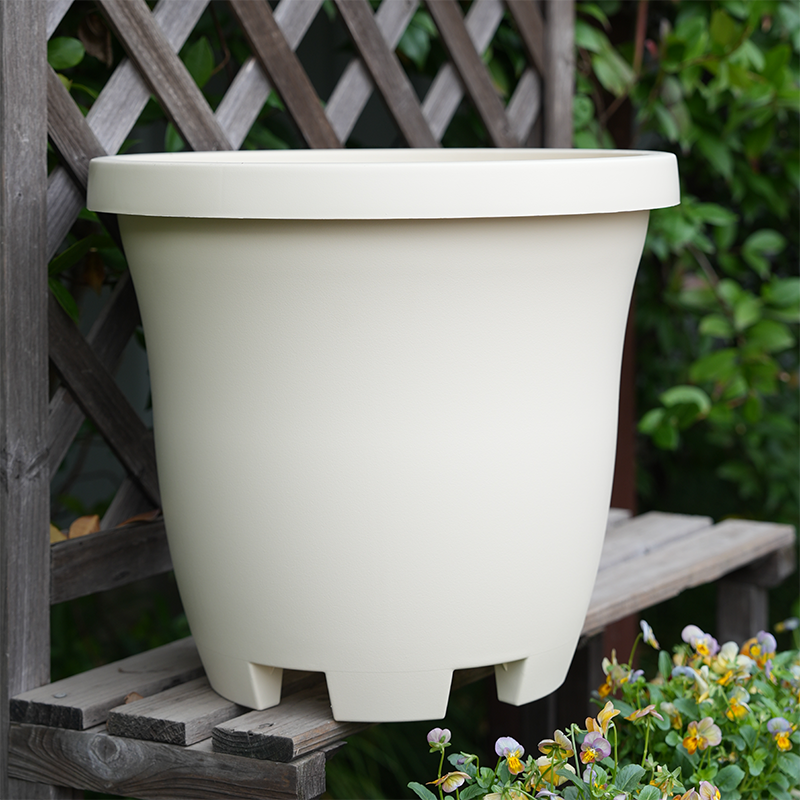
High-yield agricultural science constantly evolves. The Pot-in-Pot (PIP) system represents a major leap in commercial nursery production. This system combines the benefits of field growing with the convenience of containerized harvesting. It utilizes a permanently buried "socket" pot. This outer socket sits flush with the ground. It holds a removable "liner" grower pot containing the plant and soil media.
Thermal and moisture regulation improve dramatically under the PIP method. The surrounding soil insulates the root zone. Evidence shows this prevents root death during extreme winter freezes. It also buffers roots from blistering summer heat. Elevated temperatures in above-ground black pots frequently halt root development. By cooling the root zone, PIP systems substantially reduce daily irrigation demands. Plants experience less drought stress.
Labor reduction and risk mitigation drive PIP adoption. Above-ground containers frequently blow over during high winds. This damages canopies, spills fertilizer, and requires massive labor hours to upright. PIP entirely prevents wind blow-over. Furthermore, harvesting becomes exceptionally efficient. Workers simply lift the inner liner pot out of the socket. You eliminate the heavy machinery and immense labor costs associated with digging traditional field-grown trees.
Implementation realities require careful financial planning. The initial infrastructure demands are intense.
Site Grading: The land must be perfectly leveled.
Trenching: Deep trenches must accommodate the socket pots.
Drainage Tile Installation: Sub-surface drainage pipes must sit below the sockets to prevent water accumulation and root rot.
Socket Placement: Sockets require permanent installation and backfilling.
Despite these heavy initial hurdles, the long-term operational returns easily justify the effort for perennial and tree growers.
Procuring containers requires treating them as active agricultural tools. You must map specific pot features to real-world outcomes. Consider bi-level drainage holes. Standard flat-bottom holes often clog when placed on uneven gravel or heavy ground cover. Bi-level holes position secondary drainage pathways slightly up the sidewall. If the bottom sits in a puddle, the side holes prevent total waterlogging.
Durability testing separates quality vendors from unreliable ones. Sunlight rapidly degrades cheap plastic. You must verify vendor claims regarding UV inhibitors. Request documentation on accelerated weather testing. High-quality UV stabilizers ensure pots survive multi-year outdoor exposure without embrittlement. A pot shattering in a customer's hands destroys brand trust instantly.
Sustainability increasingly dictates vendor selection. Many commercial buyers now mandate post-consumer recycled materials. Assess the use of recycled PP5 (Polypropylene) versus virgin plastics. Recycled PP5 maintains excellent rigidity while reducing environmental impact. You must also track regional agricultural compliance laws. Some municipal buyers strictly prohibit non-recyclable black plastics due to sorting facility limitations.
Logistics and freight heavily impact your final unit cost. Container nesting capabilities define how many units fit on a single pallet. A thermoformed pot might nest tightly, shipping 5,000 units per pallet. A rigid injection-molded pot might only ship 2,000 units per pallet. Pallet densities drastically alter the landed cost of bulk inventory. Always calculate the final freight-inclusive price.
Streamlining your inventory begins with a rigorous needs assessment. You must align your container selection strictly with your crop rotation cycles. Short-term bedding plants demand vastly different containers than slow-growing perennials. Mapping your crops to specific container profiles prevents over-investing in unnecessary durability.
Implementing a standardization strategy yields immediate operational benefits. Avoid stocking dozens of minor size variations. Consolidate your inventory to two or three standard sizes from a single manufacturer line. Standardization simplifies everything. You streamline soil mixing volumes. You minimize calibration changes on automated potting lines. You optimize your shipping truck payloads.
Before securing bulk freight contracts, execute specific validation steps. Request vendor samples to verify physical quality. Test automated handling compatibility by running samples through your hoppers and un-stackers. Finally, run small-batch root development trials. Plant your most sensitive crop in the sample containers and monitor root architecture for one quarter.
Standardizing Nursery Inventory Chart | ||
Standardization Phase | Action Item | Expected Operational Benefit |
|---|---|---|
1. Audit Phase | Review current crop cycles & pot usage | Identifies obsolete or redundant pot sizes |
2. Consolidation | Reduce to 3 core pot profiles | Minimizes machine recalibration downtime |
3. Compatibility Test | Run samples through automation lines | Prevents bulk purchase of jamming containers |
4. Vendor Lock-in | Negotiate bulk freight based on pallet density | Reduces per-unit landed shipping costs |
Nursery containers function as an active component of crop cultivation, never just a passive vessel. They manipulate root growth, defend against extreme weather, and interact directly with your automated machinery. The optimal container choice requires balancing upfront material costs with long-term durability and labor efficiency. Smart procurement directly improves your crop yield and reduces harvest waste.
Take immediate action by auditing your current container failure rates. Track how many pots crack during winter or jam during automated filling. Reach out to verified commercial suppliers and request detailed material spec sheets. By prioritizing engineered functionality over basic aesthetics, you secure a more resilient and profitable growing operation.
A: Yes, keeping plants in their original grower pot is highly recommended for indoor hobbyists. You can easily bottom-water the plant by removing it, soaking it, and letting it drain. Placing the functional pot inside a decorative cachepot completely mitigates overwatering risks and protects furniture from moisture damage.
A: Absolutely. Heavy-duty injection-molded pots made from PP (Polypropylene) or HDPE (High-Density Polyethylene) withstand high temperatures and harsh chemical disinfectants. Commercial sterilization protocols using quaternary ammonium or heat treatments work effectively. However, operators must weigh the chemical costs and washing labor against purchasing new units.
A: Capillary mat irrigation relies on direct physical contact between the soil and the wet mat. Flat-bottom pots with baseline drainage holes ensure maximum soil contact, drawing water upward efficiently. Raised-bottom or heavily tiered pots break this suction, making them poorly suited for capillary mat systems.


