


Views: 0 Author: Site Editor Publish Time: 2026-09-30 Origin: Site


Urban balconies offer immense potential for lush, productive gardens. Yet, maximizing your harvest in a restricted footprint often creates unexpected challenges. You want high yields. However, you must avoid compromising structural safety, violating building codes, or creating a messy drainage hazard for downstairs neighbors.
This guide provides a pragmatic, risk-aware roadmap for configuring, securing, and maintaining your vertical garden in restricted urban microclimates. You will discover how to evaluate load limits, select durable materials, and implement foolproof irrigation methods. We focus heavily on realistic strategies for challenging high-rise environments.
Success means building a stable, self-contained vertical system. It should optimize water retention while resisting the intense wind shear common on tall buildings. By addressing physics and horticulture together, you can transform your tiny outdoor space into a thriving, resilient oasis.
Weight & Wind Realities: Fully saturated vertical setups can exceed 100 lbs; load-bearing assessments and wind-proofing are non-negotiable first steps.
Drainage Dynamics: Gravity creates a moisture gradient (dry tops, saturated bottoms). Soil structure must be adapted per tier to prevent root rot.
Strategic Tiering: Plant placement must align with individual crop needs for sunlight exposure and water demand, with heavy feeders at the base.
Routine Efficiency: Sustainable balcony gardening relies on automated or low-friction irrigation routines, not just manual top-down watering.
Before buying pots and soil, you must measure the physical limits of your space. Balconies adhere to strict operational rules. Ignoring them often leads to structural damage or unhappy property managers. You must plan defensively.
Tiered systems hold a surprising amount of wet soil. A fully saturated five-tier tower easily exceeds 100 pounds. You need to calculate this wet-weight against your balcony's structural capacity. Standard building codes often rate balconies around 40 to 60 pounds per square foot. Cantilevered or older balconies often have much lower weight tolerances. Always place heavy vertical pots near load-bearing walls rather than on outer edges.
High-rise environments act like wind tunnels. Wind shear buffets tall structures constantly. This airflow drastically increases transpiration rates in foliage. Wind dries your plants out much faster than a gentle ground-level breeze. Evaluate prevailing wind directions on your balcony. Consider placing tall planters behind structural windbreaks. You might also use temporary privacy screens to reduce wind velocity.
Sunlight dictates your crop viability completely. Log your direct sunlight hours over a few days. You need this precise data to determine your planting options. High-yield vegetables require six to eight hours of direct sun daily. Conversely, shade-tolerant foliage thrives in just three hours of dappled light. Guessing your light exposure usually results in stunted crops.
Check your lease or HOA guidelines before modifying anything. Many buildings forbid permanent railing attachments or heavy structural modifications. They also enforce strict water runoff rules. Ensure your setup prevents dirty water from dripping onto balconies below. Failure to contain runoff often triggers immediate complaints from neighbors and landlords.
Choosing the right hardware defines your long-term success. Not all vertical systems survive harsh urban environments. You need sturdy Balcony Space-Saving Planters built for rigorous outdoor use.
Avoid cheap, untreated plastics. Continuous balcony sun exposure quickly makes them brittle. They often crack mid-season under the weight of wet soil. Look for food-grade, UV-stabilized polypropylene or high-density polyethylene. These materials flex slightly under stress. They effectively resist ultraviolet degradation for many years of continuous outdoor use.
Vertical structures handle water in two primary ways. Capillary action reservoirs pull water upward into the soil. Standard flow-through designs rely entirely on gravity. Capillary systems offer better reliability in hot microclimates. They prevent rapid dry-outs during peak summer heat. Flow-through designs require highly precise soil mixes to avoid waterlogging your bottom tiers.
Consider how many tiers you can realistically stack. A narrow base heavily limits safe height. Stacking beyond four or five tiers often turns stability into a liability. Furthermore, massive towers deprive lower tiers of essential sunlight. Optimize your footprint by balancing height carefully. You want maximum yields without creating a tipping hazard or shade problem.
Urban gardens require seasonal flexibility. You must rotate your planters frequently for even sun exposure. You also need to pull them indoors during severe weather events. Always prioritize heavy-duty caster wheels. Small, flimsy wheels lock up or snap under the weight of saturated soil. Sturdy casters make maintenance significantly easier.
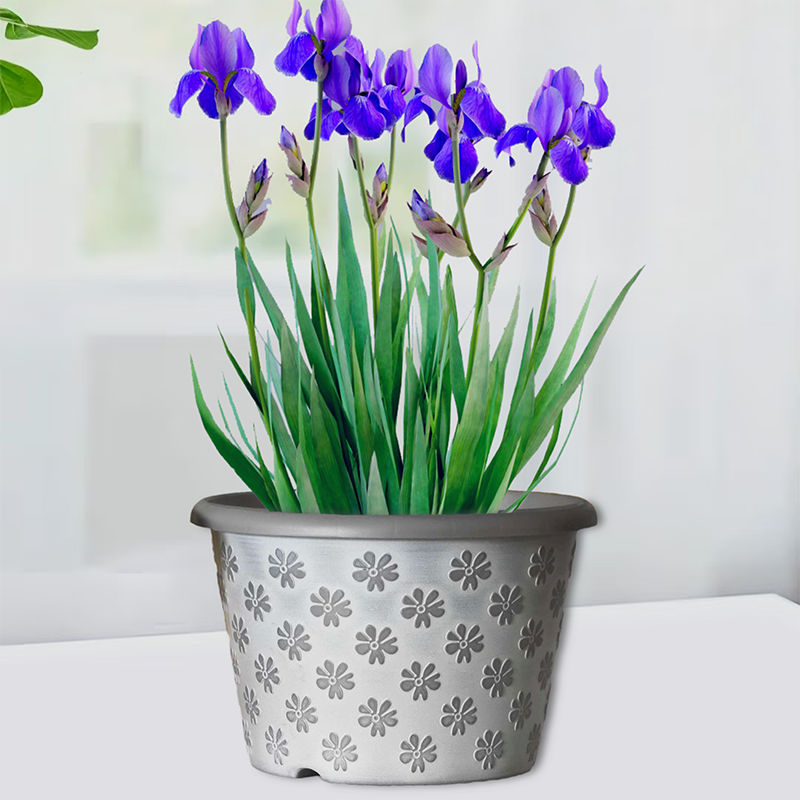
An unsecured tower poses a severe risk on a windy balcony. Setting up a Stackable Planter requires a defensive approach against gravity and unpredictable wind shear.
You must lower the center of gravity immediately. A top-heavy planter tips over easily during storms. Add heavy river rock or coarse gravel to the very bottom tier. Do this before adding any soil. This simple technique acts as an anchor. It dramatically improves stability against sudden wind gusts.
Relying purely on plastic interlocking tabs is risky. Utilize a central dowel, a thick PVC pipe, or a rebar rod. Drive this support straight through the core of all tiers. This central spine prevents lateral shifting. It also stops the tower from leaning as plants grow heavier on one side.
High winds demand extra security measures. Use safe, non-destructive tethering methods for your top tiers. Secure them to strong metal railings or heavy wall anchors. Use heavy-duty zip ties, outdoor bungee cords, or strong trellis netting. Never rely on base friction alone when gardening above the ground floor.
Build your tower carefully on a flat surface. Engage all interlocking mechanisms fully. Test the empty structure for wobble before proceeding. Sloped balcony concrete often causes subtle leaning. Use weather-resistant shims to ensure perfect leveling. Always confirm the base is completely flat before you add a single ounce of soil.
Water behaves differently when forced through vertical columns. Standard watering techniques often fail in Vertical Gardening Planters. You need specialized soil recipes and precise delivery methods.
Gravity relentlessly pulls water downward through the system. This action creates a challenging moisture gradient. Your top tiers dry out rapidly under the intense sun. Meanwhile, your bottom tiers risk becoming a waterlogged swamp. You must manage this vertical gradient actively to keep all plants healthy.
Never use dense, standard potting soil in vertical columns. It compacts quickly and traps water at the bottom. Formulate a lightweight, high-aeration mix instead. A good ratio is roughly 40% coco coir, 30% perlite, and 30% quality compost. This specific blend ensures consistent flow-through. It keeps roots breathing freely across every single tier.
Manual top-down watering rarely works well long-term. It channels water down the inner plastic walls. This leaves dry pockets in the center root zones. Implement micro-drip irrigation systems attached to programmable timers. Alternatively, use centralized watering tubes. These tubes distribute moisture outward evenly to all tiers simultaneously.
Install a gravity-fed or pump-based micro-drip line.
Schedule watering for early morning to reduce daytime evaporation.
Flush the entire system monthly to remove accumulated salt buildup.
Inspect emitter nozzles weekly for hard water clogs.
You cannot let muddy water stream across your balcony floor. Select deep catchment trays for the base of your tower. They protect your concrete flooring from permanent stains. They also prevent soil leaching. Good trays keep excess runoff from raining down onto your downstairs neighbors.
Proper plant placement dictates the overall health of your vertical garden. Filling Stackable Flower Pots requires strategic zoning based on light exposure and water demands.
Top tiers face the harshest environmental elements. Plant drought-tolerant herbs here. Thyme and rosemary excel in these dry, sunny spots. You can also use top tiers for cascading flowers or small hot peppers.
Conditions in the middle tiers remain much more balanced. Grow leafy greens here. Lettuce and spinach thrive in moderate moisture. Bush beans and compact root vegetables also do exceptionally well in this stable middle zone.
Water naturally pools near the base. Upper foliage also casts heavy shade downward. Place your heavy feeders and moisture-loving plants here. Mint and parsley thrive in bottom tiers. Shade-tolerant ornamentals are also excellent choices for the base.
Tier Position | Light & Moisture Level | Ideal Crop Types | Common Mistakes |
|---|---|---|---|
Top Tiers | High Sun / Fast Drying | Thyme, Rosemary, Peppers | Planting moisture-loving greens here. |
Middle Tiers | Moderate Sun / Balanced | Lettuce, Spinach, Bush Beans | Overcrowding foliage blocks light. |
Bottom Tiers | Low Light / High Moisture | Mint, Parsley, Ferns | Using drought-tolerant herbs here. |
Avoid root competition inside small planter pockets. Do not plant two aggressive root systems together. Pair deep-rooted plants with shallow-rooted neighbors within the same tier. For example, plant a deep carrot next to shallow leafy lettuce. This ensures they draw nutrients from different soil depths.
High-rise balconies lack natural pollinators. Bees rarely visit gardens above the fifth floor. Select self-pollinating vegetable varieties whenever possible. If you want fruiting crops, incorporate specific pollinator-attracting blooms. Marigolds and zinnias help entice insects upward. Otherwise, plan for manual hand-pollination using a small brush.
Balcony gardens require consistency above all else. A heavy pruning session once a month cannot replace a steady routine. Structured daily habits keep pests away and push yields higher.
Establish a quick morning habit. Monitor your top-tier moisture levels by touching the soil directly. Inspect the bottom drainage trays for stagnant water. Empty them immediately if you spot pooling. Standing water quickly becomes a breeding ground for fungus gnats and mosquitoes.
Plants naturally lean heavily toward the strongest light source. Rotate the entire planter 90 degrees every single week. This ensures balanced, upright growth on all sides. Apply a balanced liquid fertilizer during this rotation. Frequent vertical watering washes out nutrients quickly, so you must replenish them constantly.
Unchecked growth ruins vertical systems quickly. Aggressive growers rapidly take over shared spaces. Thin out mint or trailing vines monthly. If you skip this task, sprawling upper foliage acts like an umbrella. It chokes out essential sunlight for the struggling lower tiers.
Do not leave dead plants in your pots over winter. Follow strict seasonal cleaning protocols. Remove all old root balls thoroughly. Sanitize the plastic compartments using a mild bleach solution. Winterize your equipment by storing it indoors. This prevents off-season degradation and freezing cracks.
Successful stackable balcony gardening relies heavily on structural physics and consistent routines. You must balance the physical weight of your system while managing strict vertical moisture gradients. When executed correctly, a well-planned vertical setup transforms a barren concrete slab into an abundant green space.
Start by measuring your exact balcony footprint. Identify your strongest load-bearing zones near the walls. Assess your light profile closely for one full week to know exactly what crops you can support.
Next, shortlist heavy-duty, UV-resistant models equipped with secure interlocking mechanisms. Formulate a lightweight soil mix to prevent compaction. Finally, automate your irrigation to ensure consistent moisture delivery. By prioritizing safety and smart placement, you guarantee a thriving harvest season.
A: Most standard systems safely support three to five tiers. This depends heavily on your base width and local wind conditions. Going taller increases the tipping risk significantly. Always check your balcony weight limits and use a central support rod for anything over three tiers.
A: Manual top-down watering usually fails. Water channels down the plastic sides, bypassing the central roots completely. It leaves dry pockets in the middle tiers and floods the bottom. You should use slow-pouring techniques, centralized watering tubes, or a timed micro-drip system instead.
A: Empty the bottom tray immediately after each watering cycle. If the tray is too heavy to move, add coarse sand or gravel to the water catch zone. You can also place small pieces of Mosquito Dunks (Bti) in the tray to eliminate larvae naturally.
A: Full-sized indeterminate tomatoes struggle in these compact spaces due to severe root restrictions. They also block light for lower tiers. Stick strictly to dwarf or determinate vegetable varieties. Compact bush beans and patio peppers thrive beautifully in vertical pockets.


