


Views: 0 Author: Site Editor Publish Time: 2026-06-26 Origin: Site


Everyone wants a lush indoor jungle but nobody enjoys the constant anxiety of plant maintenance. You might frequently worry about giving your expensive tropicals too much or too little hydration. This underlying fear of causing root rot ruins the simple joy of gardening.
Traditional top-watering relies almost entirely on guesswork and human memory. Pouring moisture directly onto the topsoil creates incredibly uneven moisture distribution down at the root level. Your foliage experiences severe cellular stress as it continuously bounces between flooding and severe drought.
Sub-irrigation offers a proven systemic solution to end this frustrating cycle. While modern self-watering pots utilize physics to deliver consistent hydration, they are not magic devices. You will soon learn they require specific soil setups and proper monitoring rather than a complete set-and-forget approach.
Self-watering pots utilize capillary action to pull moisture from a bottom reservoir, delivering consistent hydration without mechanical parts.
They are highly effective for moisture-loving tropicals but carry a high risk of root rot for succulents and cacti.
"Self-watering" is a misnomer; successful adoption still requires monitoring water indicators, flushing soil minerals, and an initial top-watering transition period.
Evaluating a self-watering planter requires checking for overflow valves, aerated soil compatibility, and reliable water-level gauges.
Sub-irrigation flips traditional plant care upside down. Instead of pouring liquid over the soil surface, you supply water from below. The plant drinks from the bottom up. This process closely mimics natural groundwater absorption. In nature, deep roots stretch downward to locate subterranean aquifers. They do not rely solely on unpredictable rainfall. A well-designed self-watering planter recreates this stable subterranean environment. It gives roots autonomy over their intake rate.
Understanding the hardware helps you troubleshoot issues faster. These containers rely on four primary structural elements to function smoothly.
The Reservoir: This serves as the lower chamber holding your water supply. It sits entirely separate from the main soil body. Reservoirs vary in size, dictating how many weeks you can leave the plant unattended.
The Wicking Mechanism: This part bridges the gap between the reservoir and the root zone. Physics handles the heavy lifting via capillary action. Water naturally defies gravity, traveling upward through porous materials. Many planters use absorbent cotton or fiberglass cords. Others use specialized potting mix packed firmly into downward channels.
The Aeration Screen or Platform: This physical barrier keeps the bulk of the soil out of the liquid. Without it, the dirt would turn into mud immediately. The platform prevents the main root ball from drowning while allowing the wicks to pass through.
Water-Level Indicator: You need a way to monitor hidden reservoir capacity. Manufacturers usually include a floating gauge or a clear external window. This prevents dangerous overfilling and reminds you when the system runs dry.
Common Mistake: Many beginners assemble the container but forget to pre-soak the wicking cords. Dry cotton struggles to initiate capillary action. Always wet your wicks thoroughly before the first use.
Sub-irrigation provides tremendous physiological benefits to appropriate plant species. First, it ensures exceptional moisture consistency. It completely eliminates the dreaded drought-and-flood cycle. Leaves no longer wilt from thirst or turn yellow from sudden inundation. This stability reduces cellular stress in the foliage, leading to faster, healthier growth.
Second, these containers excel at nutrient retention. Standard pots feature open drainage holes. Every time you top-water, vital water-soluble nutrients wash out the bottom. Sub-irrigation keeps fertilizers trapped within the closed system. The plant utilizes every drop.
Finally, they offer incredible scalability for busy owners. They safely extend watering intervals to two, three, or even four weeks. You can take vacations without hiring a plant sitter.
Despite the benefits, closed systems introduce unique environmental hazards. Stagnation presents a massive risk. Anaerobic conditions inside an uncleaned reservoir breed harmful bacteria. Algae thrives in these dark, wet spaces. If you neglect maintenance, foul odors will quickly develop.
Salt and mineral buildup poses another serious threat. Because moisture constantly moves upward and evaporates from the topsoil, it leaves heavy minerals behind. Salts from fertilizers accumulate on the surface. These chemical crusts burn tender stems. You must manually flush the system every few months.
The most devastating risk remains root rot vulnerability. Continuous wicking eliminates vital oxygen pockets in heavy soils. If roots cannot breathe, they suffocate and die rapidly.
Feature | Pros (Benefits) | Cons (Risks) |
|---|---|---|
Moisture Delivery | Eliminates stress from drought-and-flood cycles. | Constant moisture suffocates roots in wrong soil. |
Nutrient Management | Prevents fertilizer from washing away. | Causes salt buildup on the soil surface. |
Maintenance Schedule | Extends watering intervals up to 4 weeks. | Requires periodic deep cleaning of the reservoir. |
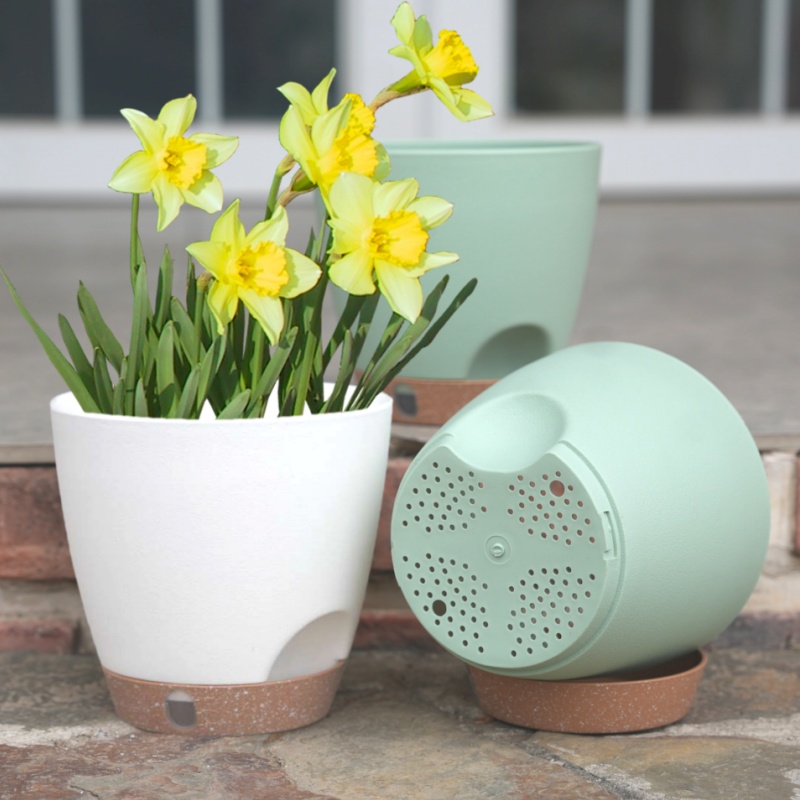
Not all indoor plants appreciate constant moisture. You must pair the right species with the right hardware. Moisture-loving tropicals thrive exceptionally well in sub-irrigated environments. They naturally grow in humid, damp forest understories. They aggressively seek out steady hydration.
Excellent candidates include:
Calatheas: Famous for crispy edges, they love the even moisture sub-irrigation provides.
Peace Lilies: These dramatic fainters remain perfectly perky with a constant water supply.
Ferns: Boston and Maidenhair ferns detest dry roots. They explode with growth in these setups.
Pothos: Incredibly forgiving vines that adapt quickly to wicking mechanics.
African Violets: Because they hate getting their fuzzy leaves wet, bottom-feeding keeps them immaculate.
Never place arid environment plants in a constant moisture setup. Species evolving in deserts require full soil dry-downs between waterings. Their roots are thick, fleshy, and designed to store water. Continuous exposure to dampness rots them entirely in weeks.
Strictly avoid using sub-irrigation for:
Cacti: They need arid, bone-dry conditions for long stretches.
Succulents: Echeverias and Haworthias will turn to mush rapidly.
Snake Plants: These thrive on neglect and hate wet feet.
ZZ Plants: They possess large potato-like rhizomes that rot upon constant water contact.
The ultimate decision must be dictated by the specific plant’s natural adaptations. Do not force a desert plant into a wetland environment just for your own convenience. Always prioritize botanical needs over human scheduling.
Many owners pot a new plant, fill the reservoir, and walk away. The plant then dies of thirst. Why? Newly repotted plants cannot immediately access the bottom reservoir. Their root systems sit too high up in the container. They have not yet grown down into the wicking zone.
You must observe a strict transition period. Owners need to top-water manually for the first three to six weeks. This encourages roots to seek moisture and establish contact with the wicks. Once you feel resistance when gently tugging the base of the stem, the roots have likely anchored themselves. You can then begin using the reservoir exclusively.
Standard, heavy potting mix fails miserably in sub-irrigated systems. Peat-heavy soils act like dense sponges. They absorb maximum liquid, compress tightly, and squeeze out all trapped air. Roots need gaseous exchange to survive. Without oxygen, they suffocate.
You must engineer an aerated soil profile. Amend your standard dirt with high ratios of chunky materials. Blend in generous amounts of perlite, pumice, or lightweight expanded clay aggregate (LECA). A good starting ratio involves 50% premium potting mix and 50% aeration amendments. This guarantees oxygen pockets remain open despite the continuous capillary action.
Best Practice: Always mix your soil dry before potting. Adding a layer of pure LECA or gravel directly above the aeration screen further prevents heavy soil from dropping into the water supply.
Even moisture-loving tropicals need a break. Constantly topping off the reservoir invites disaster. You must establish a healthy dry-out cycle.
Advise against keeping the water gauge perpetually maxed out. When the indicator hits empty, do not refill it immediately. Let the reservoir sit dry for two to three days. The soil will remain adequately damp during this window. This brief resting period allows oxygen to flood the root zone freely. It mimics natural variations in the environment and drastically reduces the chances of anaerobic bacteria forming.
Indoor and outdoor environments demand different hardware. If you plan to place containers on a patio, the product must feature an overflow hole. Heavy rainstorms will rapidly fill a closed reservoir. The water will breach the aeration screen and completely drown the plant.
A properly designed outdoor model includes a removable drain plug. You remove this plug to allow excess rainwater to escape harmlessly. For indoor use, you keep the plug securely fastened to protect your floors.
You cannot manage what you cannot measure. The water gauge serves as your primary diagnostic tool. Mechanical floating gauges rely on a styrofoam block pushing a red stick upward. They work well but often stick or break over time. Tap them gently to ensure they move freely.
Transparent reservoir bases offer foolproof visual confirmation. You can physically see the remaining water line. However, clear plastic allows sunlight to penetrate the chamber. Direct sunlight mixed with stagnant water guarantees massive algae blooms. Choose clear indicators only for low-light indoor locations.
Evaluate the long-term maintenance requirements before buying. You will need to clean the system eventually. Ask yourself how easily you can detach the lower chamber. Does it snap off with a simple twist? Or do you have to lift the heavy, wet soil ball entirely out of an outer sleeve?
Look for modular designs. You want smooth, non-porous plastics that wipe clean easily. Avoid planters with overly complex internal geometries where mold can hide during your quarterly scrubbing sessions.
Avoid transitioning your entire indoor garden all at once. Start small. Purchase a single, inexpensive model. Plant a highly forgiving species like a Golden Pothos or a basic Spider Plant. Use this initial test to gauge your home's evaporation rate, temperature impact, and your own maintenance habits. Once you master the environmental variables on a cheap plant, you can confidently upgrade your expensive tropicals.
Sub-irrigation transforms frustrating horticultural chores into manageable routines. These systems serve as highly effective optimization tools, provided you pair them with compatible plant species and heavily aerated soil profiles. You must respect the physics of capillary action by monitoring moisture levels properly.
Remember that these containers do not eliminate plant care. They merely shift the labor. You move away from frequent, stressful top-watering sessions. Instead, you adopt a schedule of infrequent reservoir maintenance, occasional soil flushing, and routine gauge monitoring. By setting the right expectations and engineering your soil correctly, you can finally enjoy a thriving, low-stress indoor jungle.
A: No, water alone does not cause root rot. A lack of oxygen causes it. Using dense, heavy soil in a closed system causes severe oxygen depletion, suffocating the roots. Creating a highly aerated soil mix with perlite prevents this issue entirely.
A: Dilute liquid fertilizer at 1/4 of the recommended strength. Pour this directly into the reservoir during regular refills. You must mandate a heavy top-flushing with pure water every few months to dissolve and remove the resulting salt crusts from the topsoil.
A: Yes, you can use them outdoors, but only if they feature a built-in overflow plug. You must remove this plug so excess stormwater can drain away. Otherwise, unpredictable rain will flood the internal chamber and drown the plant.
A: Refill rates vary significantly based on the plant's mature size, ambient room temperature, and seasonal humidity levels. Generally, a standard reservoir requires refilling every 1 to 4 weeks. Always let the tank sit empty for two days before topping it off.


