


Views: 0 Author: Site Editor Publish Time: 2026-06-29 Origin: Site


Maximizing vertical space requires lightweight, secure solutions. Gravity constantly tests elevated structures. Choosing the wrong materials inevitably leads to structural damage, water leaks, or rapid UV degradation. Weak hardware inevitably fails.
Buyers evaluating these elevated setups must balance visual aesthetics against harsh load-bearing realities. This proves especially true in small residential footprints. Apartment balconies and indoor living rooms present unique challenges. Saturated soil easily overpowers standard drywall anchors. Mature vines add unexpected downward force.
This guide establishes a reliable evaluation framework. We will help you select and implement hanging plastic flower pots based on specific environmental factors. You will learn to match container types to plant species. We also detail how hardware durability dictates long-term success. You can safely deploy vertical gardens by following these core principles.
Material matters: High-density polyethylene (HDPE) and resin composites outperform standard thin plastics in UV resistance and structural integrity.
Location dictates drainage: Outdoor placements require aggressive drainage; indoor placements require sealed bottoms or integrated self-watering reservoirs.
Weight is the primary failure point: Wet soil and mature plants easily exceed standard drywall anchor or cheap plastic hook capacities.
Hardware dictates lifespan: A plastic pot is only as reliable as its hanging mechanism (chain vs. macrame vs. plastic snap-on hangers).
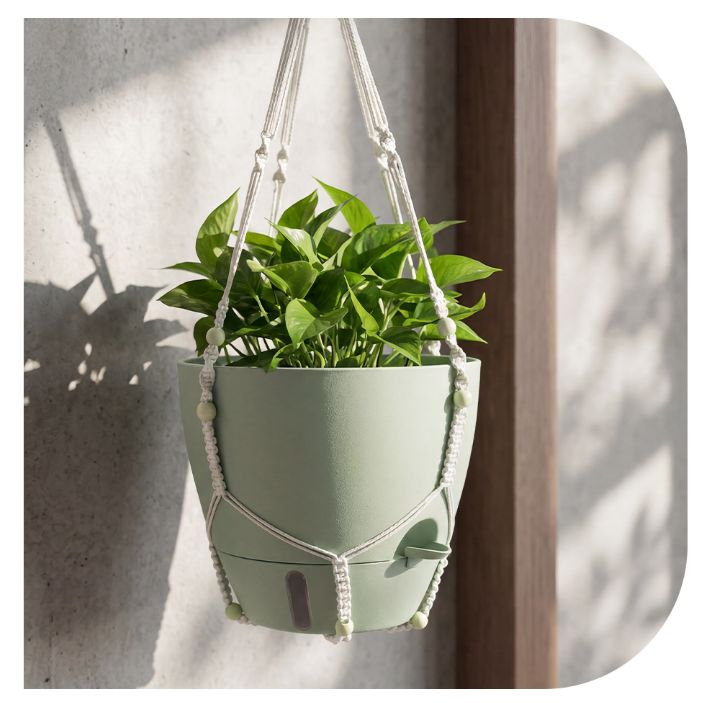
Weight reduction remains the primary driver for choosing synthetic materials over traditional clay. Ceiling joists and balcony overhangs possess strict load limits. Heavy containers severely limit your design options. A 10-inch terracotta pot weighs significantly more than its polymer equivalent before you even add soil.
Consider the realities of wet potting mix. Water adds massive weight to any container. A single gallon of saturated potting soil weighs approximately eight pounds. Plastic significantly reduces the initial baseline weight. This lower starting point protects your structural anchors from catastrophic pull-out failures.
Chart: Baseline Weight Comparison (Empty 10-Inch Pot) | |||
Material Type | Average Empty Weight (lbs) | Impact on Anchor Hardware | Drop Safety Rating |
|---|---|---|---|
Terracotta / Clay | 4.5 - 6.0 | High Strain | Poor (Shatters) |
Ceramic (Glazed) | 5.0 - 7.5 | Maximum Strain | Poor (Shatters) |
Resin / HDPE Plastic | 0.8 - 1.5 | Minimal Strain | Excellent (Bounces/Flexes) |
Moisture retention offers another distinct advantage. Porous materials actively pull moisture from the potting mix. Terracotta constantly breathes. It wicks water outward where it rapidly evaporates. Plastic entirely ignores this wicking process. It creates a closed moisture barrier. This non-porous nature proves highly efficient for moisture-loving plants. Ferns, pothos, and calatheas thrive in these stable environments. You subsequently reduce your weekly watering frequency.
Drop safety matters in residential spaces. Accidents happen during routine maintenance. High winds dislodge poorly secured containers. Shatter-resistant properties mitigate physical risk. A dropped ceramic bowl creates hazardous shrapnel in high-traffic patio areas. It destroys delicate indoor flooring. Polymers simply bounce or dent upon impact.
Affordability allows for expansive vertical garden configurations. You can populate an entire small balcony without prohibitive upfront expenses. Designing a multi-level display requires numerous containers. Synthetic options provide uniform aesthetics at a fraction of premium material prices.
Outdoor environments ruthlessly test container durability. Direct sunlight destroys inferior polymers rapidly. You must actively manage UV degradation. Standard polypropylene quickly becomes brittle. It loses flexibility after just one season of intense summer sun. The rim eventually cracks under the weight of wet soil.
You must specify UV-treated plastics for outdoor use. Double-walled resin pots offer superior protection for South or West-facing balconies. The double wall creates an insulating air gap. This gap shields delicate root systems from extreme afternoon heat. It prevents the root ball from essentially baking inside the container.
Wind resistance demands careful stabilization. High-rise apartment balconies experience aggressive updrafts. You must evaluate the swing radius of every hanging planter. Long chains allow excessive momentum. Containers easily batter against brick walls or glass railings during storms.
Shorten the hanging length: Reduce chain links to raise the center of gravity. This restricts the potential swing arc.
Utilize rigid hardware: Swap flexible ropes for rigid steel wire hangers. Rigid metal prevents twisting and spinning.
Install buffer pads: Apply adhesive silicone bumpers to the side of the pot facing the wall. This absorbs minor impacts.
Water management requires strategic planning. Open-bottom containers drain freely. This causes problems for neighbors below you. It also stains wooden balcony decking. Establish intentional drip zones. Strategically place your elevated containers directly over large floor-level pots. The lower plants capture the run-off. This maximizes water efficiency in restricted footprint spaces. It keeps your balcony floor dry and safe.
Indoor gardening requires strict moisture control. Water damage ruins hardwood floors and drywall. You cannot rely on traditional drainage trays for elevated plants. Wind or minor bumps easily spill overflowing saucers. The self-watering mandate applies to almost all indoor scenarios.
Closed-system sub-irrigation reservoirs prevent interior water damage. These specialized containers feature a sealed outer shell. A false bottom suspends the soil above a dedicated water tank. Capillary action wicks moisture up to the root zone. You fill the reservoir through a discrete side tube. This completely eliminates bottom drips.
Assess models featuring removable inner liners. This design simplifies plant care tremendously. You leave the decorative outer shell hanging from the ceiling. You extract only the lightweight inner liner holding the plant.
You can safely flush the soil in your kitchen sink.
You allow excess water to drain completely before rehanging.
You easily rotate the plant for even sun exposure.
You eliminate the need to carry heavy watering cans over your rugs.
Aesthetic integration elevates your interior design. Modern manufacturing moves far beyond the cheap "nursery pot" look. Today's injection-molded options mimic premium materials flawlessly. Evaluate matte-finish textures. Look for ribbed exteriors or faux-stone finishes. These sophisticated designs blend seamlessly into contemporary living rooms. They offer the visual weight of concrete without the structural penalty.
You must test structural integrity before purchasing. Perform a simple pinch test. Squeeze the top rim firmly between your thumb and index finger. High-quality material yields slightly to pressure but never creases. It feels resilient. Rigid, ultra-thin plastic cracks instantly under soil pressure. Avoid containers feeling brittle or producing a snapping sound when flexed.
The container relies entirely on its suspension system. Never trust cheap clip-on plastic hangers. Manufacturers frequently bundle these inferior clips with budget pots. They routinely snap under heavy loads. Temperature shifts cause these small plastic tabs to warp and release the rim.
Select industrial-grade suspension hardware. Multi-strand steel chains offer excellent durability. PVC-coated wire cables resist rust perfectly. Marine-grade rope setups tolerate constant UV exposure. Always ensure the connection points feature closed S-hooks or locking carabiners. Open hooks easily slip off during windy days.
Adaptable containers provide the best long-term value. Evaluate models featuring punch-out drainage holes. Some designs utilize threaded rubber stoppers at the base. This flexibility proves invaluable. You can insert the rubber stopper for safe indoor winter use. You can remove the stopper when moving the plant to the patio for summer. It seamlessly transitions between environments.
Matching pot depth to specific plant types prevents root disease. Improper depth guarantees water-logging at the base. Succulents require shallow, wide bowls. Their roots stay near the surface. Deep containers trap stagnant water beneath succulent roots. Conversely, trailing vines require deep vertical space. Large root systems support long, heavy foliage runs. Always measure your plant's current root ball before selecting container depth.
Installation failures generally stem from miscalculating weight loads. Drywall ceiling toggles hold specific maximum capacities. You cannot guess these numbers. You must calculate the absolute maximum weight of your setup immediately after watering.
Provide a baseline formula for safety: Pot volume + saturated soil weight + mature plant weight. A two-gallon container holds roughly 16 pounds of wet soil. The plant itself adds another two pounds. The container and hardware add one pound. Your total load reaches 19 pounds. Standard plastic drywall anchors fail at 10 pounds of constant downward ceiling force. You must locate a wooden ceiling joist. Use threaded steel lag hooks bolted directly into structural timber.
Hardware inspection requires scheduling. Metal rusts. Cotton frays. Sun degrades nylon. Establish a bi-annual checklist for all load-bearing components.
Inspect connection points: Check where the metal hook contacts the plastic rim. Look for micro-fractures in the polymer.
Test the chain links: Look for orange rust on steel chains. Rust weakens tensile strength.
Examine ropes: Tug firmly on macrame or rope hangers. Check for UV rotting or fraying near the top loop.
Clean the hook: Wipe down the ceiling anchor. Ensure the screw threads have not backed out from the ceiling.
Temperature shock damages outdoor setups. Even durable polymers become brittle in deep freezing temperatures. Expanding frozen soil exerts massive outward pressure against container walls. This inevitably cracks the rim. Outline strict winterization protocols for patio planters. Move them into a garage before the first hard freeze. Empty the soil completely if you must leave the containers outside. Clean them thoroughly and store them upside down.
Algae and mineral buildup plagues indoor setups. Synthetic materials trap internal heat. Direct sunlight hitting a dark container raises internal soil temperatures rapidly. This warm, moist environment encourages bacterial growth in un-drained indoor pots. Algae blooms along the interior walls. Outline regular cleaning protocols. Flush un-drained containers with a mild hydrogen peroxide solution twice a year. This prevents root rot. It destroys anaerobic bacteria hiding in the sub-irrigation reservoir.
Selecting the ideal elevated container demands careful environmental assessment. You must shift your focus away from pure aesthetics. Structural integrity, UV resistance, and precise drainage control dictate the success of your vertical garden. Cheap materials inevitably fail under the relentless stress of gravity and weather. Investing in high-density polymers protects your home and your plants.
Audit your structural capacity: Locate ceiling joists and verify weight limits before purchasing large containers.
Determine sun exposure: Match UV-resistant composites to harsh South-facing balconies.
Upgrade suspension hardware: Discard snap-on plastic clips immediately. Install steel cables or heavy chains.
Implement self-watering systems: Protect your interior floors by utilizing closed-reservoir designs indoors.
A: Yes, they are entirely safe if you select the correct materials. Look for food-safe, BPA-free plastics. High-Density Polyethylene (HDPE, recycling code #2) and Polypropylene (PP, recycling code #5) do not leach harmful chemicals into the soil. Avoid unmarked cheap plastics for growing strawberries, herbs, or tomatoes.
A: The structural limit of a high-quality polymer container easily exceeds 30 pounds. However, the failure point usually lies in the suspension hardware or ceiling anchor. Standard drywall ceiling hooks only support 5 to 10 pounds. Always secure heavy, wet pots directly into wooden ceiling joists using metal lag screws.
A: You can apply a clear, matte UV-protectant spray designed for outdoor plastics before planting. Additionally, choose lighter colors like white or beige. Light colors reflect heat and UV rays, significantly slowing down the photodegradation and fading process compared to dark black or green containers.
A: It is highly discouraged. Freeze-thaw cycles destroy rigid materials. Wet soil expands forcefully when frozen. This outward pressure cracks even durable resin walls. Polypropylene also becomes extremely brittle in sub-zero temperatures. You should empty them, clean them, and store them inside a garage or shed during winter.


