


Views: 0 Author: Site Editor Publish Time: 2026-06-28 Origin: Site


Historically, plastic planters carried a bad reputation. People saw them as brittle, quick to fade, and cheap looking. However, modern polymer manufacturing completely changed this reality. Today, choosing the perfect planter means balancing high-end aesthetics with serious structural longevity. You must tailor your selection to the specific environmental stressors found in residential or commercial spaces. A container thriving in a climate-controlled living room might fail miserably on a sun-baked patio.
This article provides a clear, evidence-based evaluation framework. We help you shortlist and select the right decorative plastic flower pots based on material grade, environment, and functional design. You will learn exactly how to navigate the market. We cover everything from material properties to practical implementation strategies. You will discover how to find elegant options built to last for years.
Material matters: Not all plastics are equal; rotationally molded polyethylene offers commercial-grade durability compared to standard injection-molded plastics.
Environment dictates specs: Patio pots require UV stabilization and frost resistance, while office pots prioritize low-maintenance features like self-watering inserts and leak-proof bases.
Aesthetic longevity relies on finish: Modern plastic flower pots with matte, textured, or faux-stone finishes hide wear and resist visible sun degradation better than high-gloss options.
Weight management is critical: The inherent lightweight nature of plastic requires strategic ballast (gravel/sand) for outdoor stability and wind resistance.
Plastic manufacturing evolved drastically over the last decade. You can no longer group all resin products together. The structural integrity depends entirely on the specific manufacturing process. Understanding these differences prevents premature failures.
Manufacturers primarily use two distinctly different production methods. They create injection-molded pots by forcing liquid plastic into a mold under high pressure. These feature thinner walls and offer budget-friendly appeal. They work exceptionally well for low-impact indoor use. However, they remain highly prone to cracking under severe thermal stress.
Conversely, manufacturers create rotationally molded planters by slowly heating and rotating the polymer. This process builds thicker, perfectly uniform walls. Rotomolding yields extremely high impact resistance. These containers represent the ideal standard for commercial spaces or permanent outdoor installations.
Feature | Injection-Molded Resin | Rotationally Molded Resin |
|---|---|---|
Wall Thickness | Thin to medium | Thick and highly uniform |
Impact Resistance | Low to moderate | Exceptional (shatterproof) |
Best Use Case | Indoor homes, seasonal displays | Commercial offices, outdoor patios |
Thermal Resilience | Prone to cracking in deep freezes | Highly resistant to extreme weather |
You must confirm plastic safety ratings before planting. Many homeowners repurpose decorative containers for edible patio gardens. If you plan to grow herbs or vegetables, carefully verify the materials. Look for explicit BPA-free labels on the bottom. Check for high-density polyethylene (HDPE) or low-density polyethylene (LDPE) recycling stamps. These food-safe plastics ensure harmful chemicals do not leach into your potting soil over time.
Root systems suffer greatly during rapid temperature fluctuations. Extreme heat bakes delicate roots, while deep freezes destroy them. Structural foam and double-walled plastic designs provide exceptional thermal insulation. They trap a layer of air between the inner and outer walls. This barrier protects plants from summer heat waves and winter chills. You must prioritize this double-walled feature when evaluating containers for exposed outdoor use.
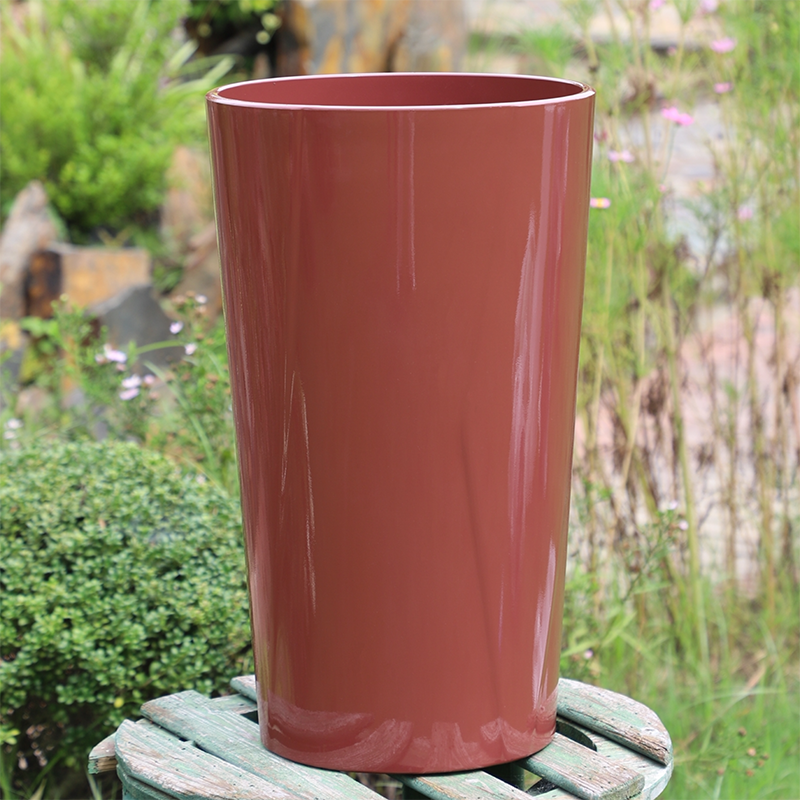
Every architectural space demands completely different specifications. You cannot treat an indoor container exactly like an outdoor one. Choosing the correct features prevents maintenance headaches later.
Indoor environments require careful consideration of flooring surfaces. You must protect carpets and hardwoods from accidental moisture damage. Look for built-in saucers or cachepot designs lacking bottom drainage holes. Mobility also matters greatly for routine cleaning. Homeowners often prefer sleek, modern plastic flower pots showcasing minimalist geometries. These complement interior decor seamlessly. They do not demand heavy structural reinforcement because indoor climates remain perfectly stable year-round.
Commercial spaces require scalability across large, busy floor plans. Employee traffic safety necessitates shatterproof materials. You must also ensure ADA compliance by maintaining clear, unobstructed pathways. Maintenance integration plays a massive role in office settings. Select planters compatible with commercial sub-irrigation or self-watering systems. These integrated features drastically reduce the time staff spend tending to the plants.
Patios expose containers to incredibly harsh natural elements. Extreme weather resilience becomes absolutely mandatory here. Your selection must possess verifiable UV-stabilization. Untreated plastics quickly suffer from ugly chalking and fading. Furthermore, you need high frost-proof ratings. These ratings ensure the container withstands intense winter freezing cycles without splitting open.
You no longer have to sacrifice elegance for durability. Modern manufacturing techniques mimic premium, heavy materials perfectly. This evolution allows for sophisticated design without the literal heavy lifting.
Advanced molds create stunningly realistic surface textures. You can easily find faux-concrete, terracotta, corten steel, or fiberglass finishes. These sophisticated options provide premium aesthetics at a mere fraction of the weight. You achieve a high-end look without struggling to move heavy stone planters around your property.
Bright, high-gloss colors look striking initially. However, they highlight micro-scratches, dust, and hard water spots. They also show sun degradation much faster than subtle tones. Instead, consider earth tones, charcoals, and textured matte finishes. These represent much safer long-term design choices. Matte surfaces hide daily wear and tear beautifully. They age gracefully, blending into natural landscapes seamlessly.
Always match your pot shapes to surrounding architectural lines. This deliberate strategy creates a cohesive visual experience. Consider tall tapered squares for framing main entryways. They draw the eye upward and create immediate grandeur. Alternatively, use low rectangular troughs as patio space dividers. They define seating areas naturally without blocking important lines of sight.
Beyond visual appeal, you must rigorously evaluate functional design. A beautiful container fails completely if it ultimately harms your plants. Always review the underlying mechanics before purchasing.
Proper drainage prevents deadly root rot. Assess whether the container includes pre-drilled holes or merely punch-out guides. Punch-out guides often require a sharp power drill to avoid cracking the plastic base. Using completely sealed containers presents exceptionally high risks. If you use a sealed cachepot, you must insert an inner nursery liner. This allows you to remove the plant for watering and drain excess moisture easily.
Sizing logic heavily dictates your plant's future health. You must ensure the internal volume supports at least a two-year growth cycle. Leaving adequate clearance around the root ball prevents premature repotting stress.
Follow this simple sizing guide for optimal growth:
Measure the exact diameter of the current nursery pot.
Select a new container 1 to 2 inches wider for small tabletop plants.
Choose a container 2 to 4 inches wider for large floor plants.
Verify the internal depth allows proper downward root expansion.
Wet potting soil weighs significantly more than dry soil. You must evaluate the rim and base thickness before purchasing. Flimsy plastics bow or warp outwards under the intense pressure of damp, heavy soil. Commercial-grade rotomolded plastics maintain their rigid shape perfectly. They refuse to warp, regardless of the internal soil load.
Even the absolute best planters require proper installation. Careful setup mitigates common risks associated with lightweight polymer materials. Proper planning ensures years of flawless performance.
The inherent lightweight nature of plastic presents a serious tipping hazard outdoors. You must use strategic ballast to lower the center of gravity. This prevents tall plants from blowing over during severe storms.
Follow these precise steps to anchor lightweight containers:
Place the empty container in its final outdoor location.
Add a heavy base layer of river rock, bricks, or coarse sand.
Fill the bottom third of the container entirely with this non-absorbent ballast.
Add a sturdy layer of landscaping fabric over the rocks to block soil migration.
Fill the remaining upper volume with high-quality, well-draining potting mix.
Many residential communities enforce strict property management guidelines. Verify your selected styles meet local Homeowner Association rules. Check for required color uniformity or strict balcony height restrictions. Shared apartment balconies often demand uncompromising leak prevention measures. Always utilize deep, fully sealed saucers to avoid water dripping onto neighbors below.
You must understand transparent assumptions about "frost-proof" claims. High-grade polymer resists cold beautifully, but it cannot defy basic physics. If soil becomes fully waterlogged and freezes solid, expanding ice can split any material. Proper drainage remains your primary defense against winter damage. Always ensure drainage holes remain completely clear of debris before winter begins. Elevating the container slightly on pot feet also prevents dangerous ice blockages.
The optimal choice always bridges aesthetic requirements with harsh environmental realities. You must demand verifiable UV and frost resistance for outdoor setups. Conversely, indoor environments require strict leak-proofing and careful flooring protection. Never compromise crucial functional needs for visual appeal alone.
Start by measuring your plant's required root ball diameter accurately. Next, carefully assess your specific sun exposure and local weather patterns. Finally, filter your shortlist heavily by material grade. Prioritize rotomolded plastics whenever you need long-term outdoor stability. Armed with this knowledge, you can confidently select the perfect decorative plastic flower pots for any space.
A: Untreated plastics will fade and become brittle quickly. However, premium outdoor planters use UV-stabilized resins. These specialized polymers block ultraviolet light, preserving color vibrancy for many years. To maximize lifespan, choose earth tones or matte finishes, which hide minor sun degradation far better than bright, high-gloss colors.
A: Yes, if they feature high frost-resistance ratings. Thick, rotomolded polyethylene handles freezing temperatures easily. However, you must prevent water from pooling and freezing solid inside the pot. Always clear the drainage holes in late autumn. Elevate the container on pot feet to ensure melting ice escapes freely.
A: It depends entirely on your success criteria. Plastics offer unmatched shatter resistance and weigh significantly less, making them ideal for large outdoor plants or high-traffic areas. They also retain moisture longer. Ceramic offers better soil breathability but breaks easily and becomes dangerously heavy when filled with wet soil.
A: You must use the one-third ballast method. Before adding potting soil, fill the bottom third of the planter with heavy, non-absorbent materials like river gravel, crushed rock, or bricks. Cover this heavy base layer with landscape fabric. This significantly lowers the center of gravity, effectively preventing wind tip-overs.


